Incure Litemask™ 8188G: A High-Temperature Peelable Maskant for PCB Assembly
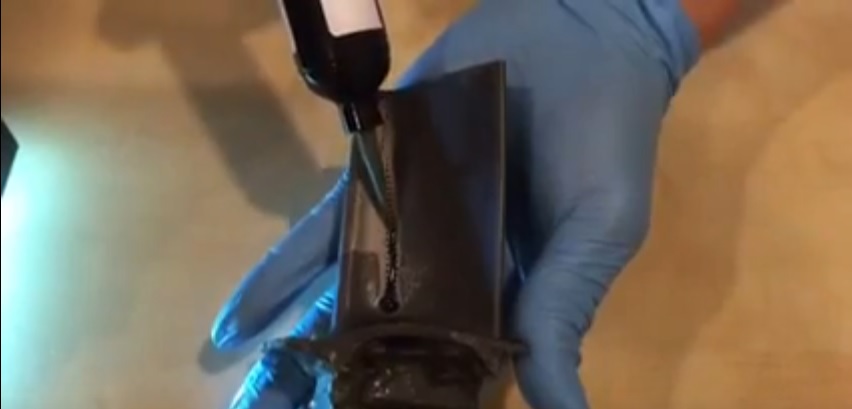
Board assembly puts a lot of surfaces close together that need different treatment: pads to be soldered, contacts to stay bare, features to stay clean. Incure Litemask™ 8188G is a high-temperature, light-curable peelable gel maskant for protecting the ones that must not see solder or process contamination. Selective protection on a populated board On a printed circuit board headed through wave soldering or selective soldering, the maskant defines where solder is allowed and where it is not. It covers gold fingers, edge connectors, press-fit sockets, test points, and mechanical hardware, then peels away after the thermal process without leaving anything behind. 8188G is formulated as a tough-yet-soft film. It withstands the temperatures of wave soldering while keeping enough elongation to be removed in one clean piece, rather than embrittling and breaking into fragments that wedge between leads and pads. What it protects against The cured film shields surfaces from chemical stains, burnt marks, and other contamination generated during soldering. The formulation is 100% solids with no volatile organic compounds and no acids. On electronic assemblies, the absence of ionic residue is critical: trapped ionic species can drive corrosion and electrochemical migration in service. Typical protected features are PCBs, populated components and sub-assemblies, and any board-level connector or contact that has to stay solderable and clean for a later operation. Cure options and control 8188G cures under UV, visible, or LED light. The reaction is radical photopolymerization driven by energy near 365–405 nm. Repeatability depends on the delivered dose, measured in millijoules per square centimeter with a radiometer, and on exposure of every masked surface, including the shadowed side of tall components. Gel films built thick, or masked regions in a lamp shadow, are where cure lags. A skinned-over surface with a soft underlayer leaves residue on peel. Adequate dose plus a fixture that presents all masked faces to the light keeps the full film solid. Because UV output declines with source age, intensity should be verified on a schedule. Batch trays cure under Incure L-Series UV LED flood lamps, and enclosed work fits an Incure B/C-Series UV cure chamber. Application and removal 8188G is applied by brush or dispense and shaped to the masked boundary. Its gel body holds position around component outlines and on vertical features without running. After soldering, the film peels by hand; the target is a single clean motion with no fragments left in fine-pitch areas. Because it replaces the slow work of cutting and burnishing high-temperature tape around connectors and dense features, the gel reduces the labor content of solder masking. For help matching Litemask™ 8188G to a specific soldering profile and peak temperature, Email Us with the process details and the features being protected. Failure modes Charring at the mask line means the film exceeded its temperature limit or dwelled too long in the heat; set the boundary back from the hottest zone. Fragmenting on removal indicates excess thermal history, so removal timing is part of the process spec. Tacky residue is a cure…